
If you have more examples of media disinformation about kratom, please leave a link and a comment in the comment section below
Two students at the University of Mississippi were found dead on September 21, 2026. A media firestorm resulted, and several outlets blamed kratom that was supposedly found near the bodies of the students. It turned out police did not find kratom but a product called “SMAX Pseudo DHM” manufactured by the company Modus. A lab analysis of this product is not yet available but it could possibly contain mitragynine pseudoindoxyl and MGM-15. A post-mortem toxicology report for the students has not yet been released.
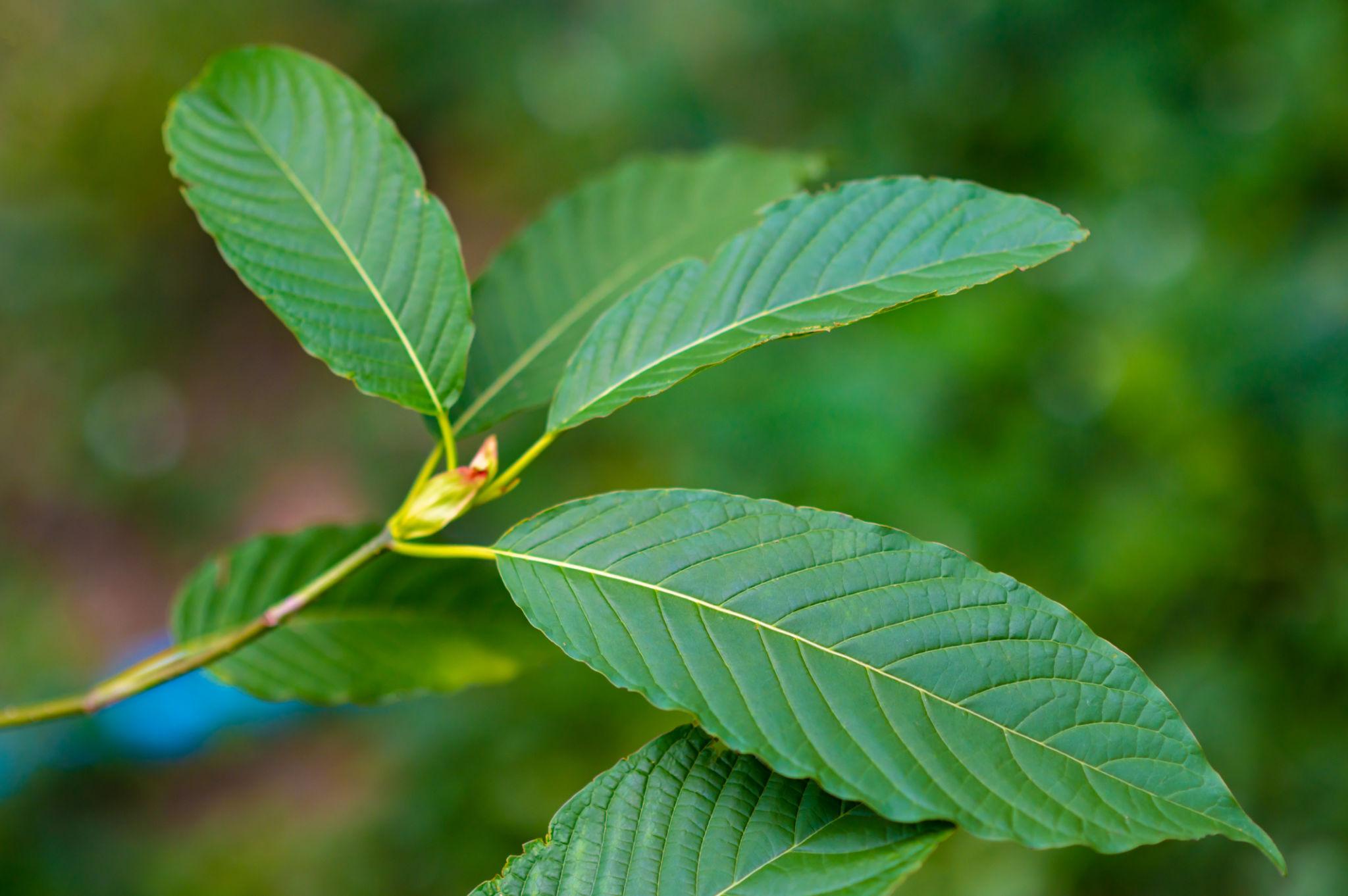
Although various companies in the natural or semi-synthetic extract industry like to sell whatever they want as “kratom”, kratom is only properly defined as leaves from a tree that are usually crushed and ground into a powder when consumed in the United States. Kratom is not kratom extract. Kratom is not 7-OH, mitragynine-pseudoinoxyl, MGM-15 or MGM-16.
The latest media blitz on kratom has contained loads of dangerously bad information, this time amplified very loudly on popular outlets like CNN and Fox News. We examine some of these claims below. The false claim “Kratom found at the scene” has been so ubiquitous it’s not even worth listing in this very partial list of misinformation published in popular corporate media since September 21…
CNN: “Authorities are urging people to avoid an herbal extract found during their investigations into the deaths of two students” “While there is no confirmed evidence that the deaths Monday are connected, packaged kratom — an herbal extract that can produce opioid- and stimulant-like effects — sold at a retail store was found in both probes”. “Kratom is an herbal extract that comes from a tree in Southeast Asia, and its leaves are used to make supplements, which are also called kratom.”
Live Now Fox: “Kratom is a plant-based extract”
What they got wrong: Kratom is leaves from a tree that are either fresh or dried and crushed or, the most popular way kratom is sold in the US, ground into a powder. Kratom is not an extract. Kratom extract is an extract. Sometimes the extracts, and 7-hydroxymitragynine (7OH) products which involve oxidization of mitragynine, are sold as kratom, which has led to the confusion. Both the 7OH and kratom extract industries have targeted naive consumers to sell products as “kratom”.
CNN: “‘Kratom leaves contain two major psychoactive ingredients (mitragynine and 7-hydroxymytragynine),’ according to the Drug Enforcement Administration”.
What they got wrong: Quoting a law enforcement agency on science is always a bad idea. At least use a science-based agency like NIDA, CDC, or FDA. 7OH occurs in trace amounts in kratom, so it is false to call it a “major” “ingredient”. The term “ingredient” is also a misleading way to describe naturally occurring alkaloids. 7OH occurs as a metabolite of mitragynine after its consumed.
CNN: “It’s often called ‘gas station heroin’ because it is widely sold over-the-counter in convenience stores and can produce powerful, opioid-like effects in the brain.”
What they got wrong: Kratom consumers never called kratom or kratom extracts “gas station heroin”. This label was applied to tianeptine. This was a term applied by the media, likely because they were not thorough enough in their research, and used the term because of the association with an illicit substance that many people are afraid of.
CNN: “Signs of kratom poisoning include high blood pressure, vomiting, heart attack, tremors, seizures, delusions, hallucinations, liver damage and an increased heart rate, known as tachycardia. That can cause heart palpitations, dizziness or lightheadedness, shortness of breath, fainting and chest pain.”
BBC: “Hallucinations are possible, too.”
What they got wrong: Some of these effects may have happened as a result of kratom use, but these claims are all based on case reports – single episodes of individuals reported in medical literature. A mechanism of action for how kratom alkaloids can possibly cause some of these effects has not been established. Claims of delusions and hallucinations, which has been repeated often in media as a kratom side effect, involves case reports of patients who have been sleep deprived, ingested other substances, suddenly discontinued psych medications, or have a history of hallucinations or psychiatric disorders. In one case a paper on both kratom and salvia divinorum was quoted as a source for the claim that kratom can cause hallucinations. The source paper only claimed this in salvia divinorum, not kratom. Kratom Science has covered this problem here and here.
CNN: “Between 2015 and 2025, 233 people died from kratom use, with 184 of those deaths also involving other substances.”
What they got wrong: Likely the remaining 49 people who did not die from poly-substance use did not die from leaf kratom, but possibly from mitragynine toxicity from excessive use of mitragynine extracts. However, excessive use of any substance can cause death. The most likely scenario for leaf kratom death is asphyxiation, which may account for one or two of the 49 deaths.
Live Now Fox took it even further, diagnosing all poison control center calls as “kratom poisonings”. “According to data from the Centers for Disease Control and Prevention, in 2015, there were roughly 250 cases of kratom poisoning. In 2025, that number rose to about 3,400 – a 1,200% increase”. This is a flat out lie, as the CDC report released in March 2026 explicitly dealt with “kratom exposure reports”, not “kratom poisonings”. The sudden spike in recent years was likely due to the widespread availability of 7-OH products which are stronger than kratom and in many instances sold with multiple doses in a single capsule.
BBC: “As its popularity spread around the globe, it entered the US market as a supplement around 2016.”
What they got wrong: Kratom has certainly been sold in the US many years before 2016. One hypothesis puts its first use by Americans in the US by soldiers returning from the Vietnam War. If evidence exists that kratom was sold in the US prior to 1994, it could legally be declared a dietary ingredient under the DSHEA act.
BBC: “In Malaysia, where the kratom tree is native, consumption and sale are banned under the Poisons Act of 1952.”
What they got wrong: It’s true that kratom is banned in Malaysia, but they purposely left out that kratom is also native to Thailand, which recently reversed a ban that was enacted in the first place to protect opium sales. Kratom tea drinking has never been regarded as drug use in Thai culture. Majority Muslim countries like Malaysia often ban all psychoactive substances for religious purposes, just like caffeine is forbidden in some Christian sects.
Fox News: “Kratom acts as a stimulant at low doses, which could provoke heart arrhythmia,” Fox News senior medical analyst, Dr. Marc Siegel told Fox News Digital. “At high doses, it acts more like an opioid, and so can suppress breathing.”
“It’s affecting the opioid receptors in people’s brains.” “It can cause them to be overly sedated, it can slow down their breathing and general function of their lungs.”
What they got wrong: There’s not adequate evidence in the scientific literature to support the claim that kratom can cause respiratory depression. Tachycardia has been found, but the term “provoke” to describe something that may contribute to arrhythmia from kratom use alone seems unscientific. In any case, it’s a good idea for people with pre-existing heart conditions to not use kratom.
Fox News: “Steinman also responded to those who might claim that kratom is safe due to the fact that it’s a natural substance.
“‘Just because something’s from the earth doesn’t make it healthy — people can get addicted and compulsive with lots of things,’ she said.”
What they got wrong: This is a straw-man argument repeated over and over again. While there is likely claims that natural = safe, they are random voices on the internet. Companies and major kratom advocacy organizations aren’t claiming this about kratom. A legitimate claim might be that people have consumed this plant for centuries without the reported harms that have been claimed in the past decade in the US.
Fox News Sean Hannity Interviewing Dr. Drew: Dr. Drew: “To die of it, overdose on it is rather difficult unless you’re also taking muscle relaxers, benzodiazapines, or alcohol.”
What they got wrong: This isn’t exactly wrong but it’s an incomplete list of substances kratom can interact with. He could have also noted that toxic herb-drug interactions are more likely to occur with concentrated mitragynine or full spectrum extract products that are both stronger and more popular than kratom. Most people who have died with kratom in their system also had fentanyl, and a significant number have had diphenhydramine (Benadryl). Any substance using CYP2D6 or CYP3A4 enzymes for metabolism can cause an interaction with kratom, that also metabolizes with those enzymes. The combination creates a bottleneck effect that does not allow both substances to metabolize as quickly as they would if taken alone.
Fox News Sean Hannity Interviewing Dr. Drew: “The fact that this [kratom] is available at convenience stores and gas stations across the country should sound bizarre to everyone. It’s no different than selling little pieces of Vicodin over the counter. It’s the same effect, it’s 7-hydroxy. People have learned, in certain states they’re putting the lid on this, they’ve outlawed it in some states, in fact. They now have concentrated these 7-hydroxy-mitra-gene [sic] and they’re selling that at as a separate entity which is even more addictive and more dangerous.”
What they got wrong: Dr. Drew just runs three substances together as though they’re all the same: kratom, 7-hydroxymitragynine, which he mispronounces, and Vicodin. Kratom has a very low partial opioid agonism, 7-OH has a high partial-opioid agonism, and Vicodin is acetaminophen (or Tylenol which causes liver failure in hundreds of people per year) mixed with hyrdrocodone, a full opioid agonist. There’s not enough evidence to state 7OH is more “dangerous” than kratom if the danger is referring to potential toxicity.
Fox29 Philadelphia: Dr. Daniel Teixeira Da Silva of the Philadelphia Health Department was interviewed on this segment. He said “Kratom is a plant. But what the danger is, is mitragynine. Mitragynine is the active ingredient in kratom, and it’s actually being created in a lab. 7OH-mitragynine is what’s being sold on store shelves, and that’s what’s really concerning.”
What they got wrong: Mitragynine is not made in a lab. It can be extracted from kratom. And let’s just assume he misspoke when he said “7OH-mitragynine”.
Fox29 Philadelphia: Newscaster Thomas Drayton: “When you take this, now classified as a Schedule I drug, what does it do to the body? What does it do to the brain?”
What they got wrong: He was asking about kratom, which is not classified as a Schedule I drug in Pennsylvania or nationally. New Jersey recently classified mitragynine-pseudoindoxyl, MGM-15, and MGM-16 as Schedule I substances to go along with the new federal rule that recently did the same. Dr. Da Silva corrected newscaster Karen Hepp a moment later in the interview for repeating the same mistake.
Fox29 Philadelphia: Ticker “KRATOM STIMULATES THE EFFECTS OF OPIOIDS”
What they got wrong: No idea what they’re going for here, but if they mean “Kratom acts on opioid receptors” the word “stimulates” is wrong. If they’re trying to say “Kratom has effects similar to a stimulants” than opioids have nothing to do with it. No idea.
9News Denver: In a “How to talk with teens about kratom” segment, parenting expert Dr. Sheryl Ziegler refers to kratom as “a substance that’s not really controlled. So it comes here and it’s sold at convenience stores…it can be a gummy, it can be a drink, it can be a shot… It feels really accessible because you can just buy it at a convenience store. So it doesn’t feel, or maybe be perceived, especially by a teenager, as something that would be dangerous.” “There are a lot of things that teenagers have easy access to.” Newscaster: “It’s just scary that there’s such easy access to this stuff.” Dr. Ziegler, “Yep. Unregulated. Just out there. Easy to get. No problem.”
What they got wrong: Colorado passed the Kratom Consumer Protection Act in 2022, making it illegal to sell kratom to those under 21 years of age. In 2025, further regulations were passed in Colorado to protect minors, forbidding kratom to be sold in the form of candies or vapes.