

On June 1, the National Institutes of Health (NIH) announced that mitragynine, the most abundant alkaloid in kratom, has been cleared as an Investigational New Drug (IND). With IND status, scientists at University of Florida are now authorized to study the effects of pure mitragynine in human subjects.
National Institute on Drug Abuse (NIDA) Director Nora Volkow said in a news release, “This IND is a major step toward expanding treatment options for the millions of Americans struggling with opioid use disorder, which has contributed to historically high overdose mortality rates.”
Multiple guests on the Kratom Science Podcast have shared personal stories about consuming kratom to aid them in their recovery from problematic opioid use. They have also consumed kratom for other issues, including pain management. However, if and when mitragynine achieves approval as a new drug during this specific process, it will only be approved for OUD, and not as a pain reliever (unless a separate IND application is submitted for that purpose). According to the news release, the trial is part of the Helping to End Addiction Long-term® Initiative (NIH HEAL Initiative®), established in 2018 as a response to the opioid crisis.
Approval for a new drug is a long and expensive process, typically lasting 8-15 years and costing hundreds of millions of billions of dollars. University of Florida researchers, many of whom have appeared on the Kratom Science Podcast, have spent years studying kratom leading up to the IND authorization for mitragynine. Their work includes preclinical animal studies, in vitro research, and pharmacokinetic analyses required for the IND application process.
The first stage of human testing is known as Phase 1 clinical trials (You can keep track of the MG001 Phase 1 clinical trial on ClinicalTrials.gov) . These studies are usually small, often involving between 20 and 100 participants. Their primary purpose is to evaluate the drug’s safety, determine appropriate dosage ranges, understand how the drug is absorbed and eliminated by the body, and identify common side effects. Phase 1 studies are not intended to prove that the drug effectively treats a disease.
The Phase 1 trial for mitragynine (called MG001 in the study) is estimated to begin in September 2026 and be completed by April 2027 and will include 32 healthy adult volunteers who will receive either a placebo or a 25, 50, 75, or 100mg dose of mitragynine. Participants’ health will be monitored and blood will be drawn to study mitragynine’s pharmacokinetics.
If Phase 1 is successful, the drug moves into Phase 2 clinical trials, which typically involve several dozen to several hundred participants who have the condition the drug is intended to treat. Researchers begin evaluating whether the drug actually works while continuing to monitor its safety. They also compare different doses to identify the one that provides the greatest benefit with the fewest side effects. Many experimental drugs fail during Phase 2 because they do not demonstrate sufficient effectiveness or because safety concerns emerge.
Drugs that show promising results in Phase 2 advance to Phase 3 clinical trials. These are large studies that often enroll hundreds or thousands of participants at multiple medical centers. Phase 3 trials are designed to provide definitive evidence that the drug is both safe and effective. Researchers typically compare the investigational drug with a placebo or with the current standard treatment. These studies are the most expensive and time-consuming part of the development process and often cost hundreds of millions of dollars.
If the Phase 3 trials are successful, the sponsor submits a New Drug Application (NDA) to the Food and Drug Administration. This is a comprehensive application that contains all of the evidence collected during the drug’s development, including laboratory data, animal studies, clinical trial results, manufacturing information, statistical analyses, and proposed prescribing information. The FDA carefully reviews this evidence to determine whether the benefits of the drug outweigh its risks for the specific disease or condition it is intended to treat. The agency also inspects manufacturing facilities to ensure the drug can be produced consistently and safely.
If the FDA concludes that the evidence supports approval, it authorizes the drug to be marketed for one or more specific medical indications, meaning the diseases or conditions for which the drug has been proven to be safe and effective. Approval for one indication does not automatically mean the drug is approved for other uses.
Even after a drug is approved and begins to be prescribed, the process continues. Researchers, physicians, manufacturers, and the FDA continue monitoring the drug through post-marketing surveillance, sometimes called Phase 4 studies. This ongoing monitoring helps identify rare side effects, long-term safety issues, or unexpected risks that may not have become apparent during the earlier clinical trials.
Overall, only a small percentage of Investigational New Drug applications ultimately result in an approved medication.
Inevitably, when it’s announced that a kratom alkaloid is in the process of becoming an approved pharmaceutical drug, some kratom consumers and advocates become concerned that the pharmaceutical industry that invests in the process and manufactures this drug will lobby to make natural leaf kratom illegal. That industries lobby for prohibition is not controversial. The alcohol industry has a well documented history of lobbying to keep cannabis and cannabis-derived products illegal. Currently, the for-profit rehab and personal injury attorney industry is lobbying to outlaw kratom. Even the kratom industry is lobbying to make 7-hydroxymitragynine products illegal.
However, it’s not codified in law that plants automatically become illegal when drugs from them are developed. For example, Epidiolex (an approved drug that is purified CBD from the cannabis plant) was approved as a drug in 2018. It could not yet be prescribed because all parts of the cannabis plant were still federally controlled until September 2018 when Epidiolex was classified as a Schedule V drug. The 2018 farm bill then legalized all forms of the hemp plant except THC. Since 2018 multiple states have legalized recreational cannabis or allowed their own medical marijuana programs. Doctors will not be able to prescribe mitragynine if it is a Schedule I drug when approved. However, it could still be prescribed as a drug under other schedules that would prohibit kratom from being sold.
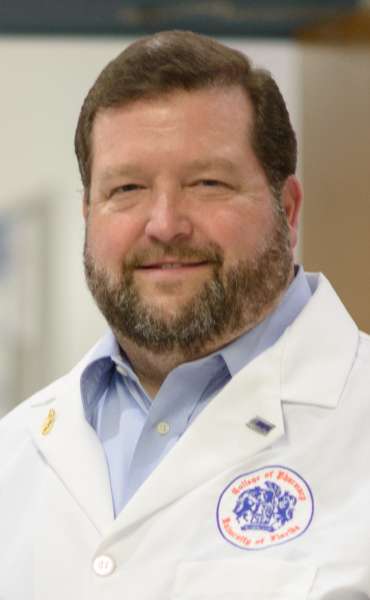
In a 2022 interview with Kratom Science, Dr. Chris McCurdy, who is on the team investigating mitragynine for drug approval, said,
“I will address the ugly elephant in the room real quick, because everybody thinks that being in pharmaceutical research, and being in drug development, the only interest that I have is going after this thing to make new pharmaceuticals and get rid of the product itself, and that’s the furthest thing from the truth. What we want to do is decrease any type of harm that could be associated with the benefit, so that individuals have access to something that’s natural, that’s safe, that we can trust. Can it inspire us to create pharmaceuticals? Well, heck yeah. I mean 25% of all prescription drugs are either natural products or are inspired from natural products themselves. Isolating these alkaloids, understanding the chemistry of them, understanding that specific pharmacology all being turned up on full blast is so vitally important to our understanding of how they all will come back and work in concert together within the plant as that symphony orchestra. But they also start to point us in other directions. Can we develop a whole new class in a whole new area of antidepressants, or a whole new area of anxiety medications, or a whole new area of pain medications? So there’s a lot of ways that it can be mutually beneficial down both pathways. Not to exclude one over the other, ever. That would never be anything we set out to do.”