
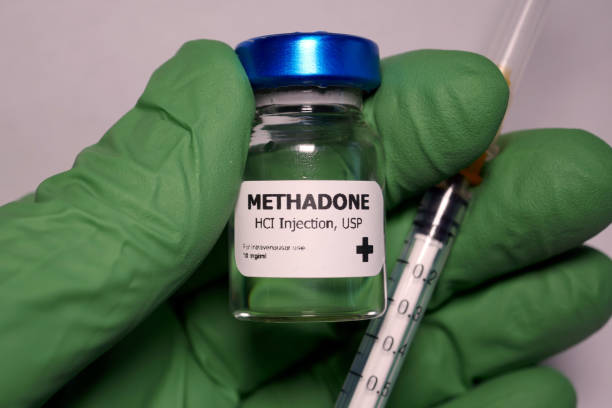
A case series published recently in the Journal of Addiction examined 14 American patients of Community Medical Services, a healthcare company specializing in the medically assisted treatment of Opioid Use Disorder (OUD). The patients were diagnosed with Kratom Use Disorder (KUD) (Sherrick, 2026).
The very brief report does not get into specifics about kratom product categories (such as dry powder, liquid extract, etc.), brands, alkaloid makeup, history and frequency of use, or dosages. It does note that 64% of the participants used both kratom and 7-hydroxymitragynine (7-OH) products. This grouping could be considered problematic. Kratom is leaf material (or an extract thereof) that contains over 50 alkaloids and only trace amounts of 7-OH. In contrast, 7-OH is an entirely different substance, produced by oxidizing the most abundant alkaloid in kratom, mitragynine.
The report notes that 13 out of 14 patients remained in treatment, and it concluded that “Methadone was well tolerated and effective in stabilizing patients with KUD, supporting its use as a viable alternative when buprenorphine is not suitable.”
In the context of opioid receptor activity, methadone is a full agonist at the mu-opioid receptor, whereas kratom’s primary alkaloid, mitragynine, is a partial agonist. 7-OH has been described as a partial opioid agonist that may, however, have stronger binding affinity to the mu-opioid receptor than even morphine, a full agonist.
Considering kratom, and not 7-OH, the authors of “Controversies in Assessment, Diagnosis, and Treatment of Kratom Use Disorder” published in Current Psychiatry Reports note that the distinction between partial and full agonist opioids is clinically significant and is considered a major risk when using methadone for kratom treatment, and should “not be a first-line therapy for most isolated KUD patients”, particularly in patients who are “opioid-naïve” (Smith et al, 2024).
Dr. Kirsten Smith served as the lead author on analyses highlighting that current KUD case reports often suffer from “problematic” assessment methods. The reports frequently omit specific details regarding the type of product, dose, and frequency of use. The authors emphasize that capturing the specific context of the product type, formulation, and even brand name is essential for clinicians to provide individualized care and accurately diagnose the severity of KUD (Smith et al, 2024 and Smith et al, 2023).
There is also a general concern that using a full agonist to treat a partial agonist may simply replace one dependency with a much stronger dependency that is harder to discontinue. Because of these risks, buprenorphine (a partial agonist like mitragynine) is generally preferred over methadone for managing kratom withdrawal and maintenance, unless the patient has a significant history of co-occurring OUD involving stronger substances like heroin or fentanyl. An evidence brief describes how buprenorphine’s partial agonist effect leads to a ceiling on respiratory depression and overdose risk, whereas full agonists (methadone) do not have this property and can cause more severe dependence and adverse outcomes (National Academies of Sciences, Engineering, and Medicine, 2019). An observational study found significantly lower all-cause mortality and suicide mortality for people treated with buprenorphine compared with methadone, indicating a risk reduction advantage of partial agonists in real-world clinical use (Gottlieb et al, 2023). A systematic review found that while methadone may have higher retention, buprenorphine users were more likely to achieve opioid abstinence (Canadian Agency for Drugs and Technologies in Health, 2016).
It is also not reported in Sherrick 2026 whether the KUD patients underwent buprenorphine treatment previously for either KUD or problematic 7-OH use.
REFERENCES
- Canadian Agency for Drugs and Technologies in Health. (2016). Buprenorphine/naloxone versus methadone for the treatment of opioid dependence: A review of comparative clinical effectiveness, cost-effectiveness and guidelines. https://www.ncbi.nlm.nih.gov/books/NBK385164/
- Gottlieb, D. J., Shiner, B., Hoyt, J. E., Riblet, N. B., Peltzman, T., Teja, N., & Watts, B. V. (2023). A comparison of mortality rates for buprenorphine versus methadone treatments for opioid use disorder. Acta Psychiatrica Scandinavica, 147(1), 6–15. https://doi.org/10.1111/acps.13477
- National Academies of Sciences, Engineering, and Medicine. (2019). Medications for opioid use disorder save lives: Chapter 2—The effectiveness of medication-based treatment for opioid use disorder. The National Academies Press. https://doi.org/10.17226/25310
- Sherrick, R. C. (2026). Treatment of kratom use disorder with methadone in an opioid treatment program. Journal of Addiction Medicine. Advance online publication. https://doi.org/10.1097/ADM.0000000000001666
- Smith, K. E., Epstein, D. H., & Weiss, S. T. (2024). Controversies in assessment, diagnosis, and treatment of kratom use disorder. Current Psychiatry Reports, 26, 487–496. https://doi.org/10.1007/s11920-024-01524-1
- Smith, K. E., Feldman, J. D., Schriefer, D., et al. (2023). Diagnostic ambiguities and underuse of clinical assessment tools: A systematic review of case reports on kratom addiction and physical dependence. Current Addiction Reports, 10, 282–292. https://doi.org/10.1007/s40429-023-00474-7