
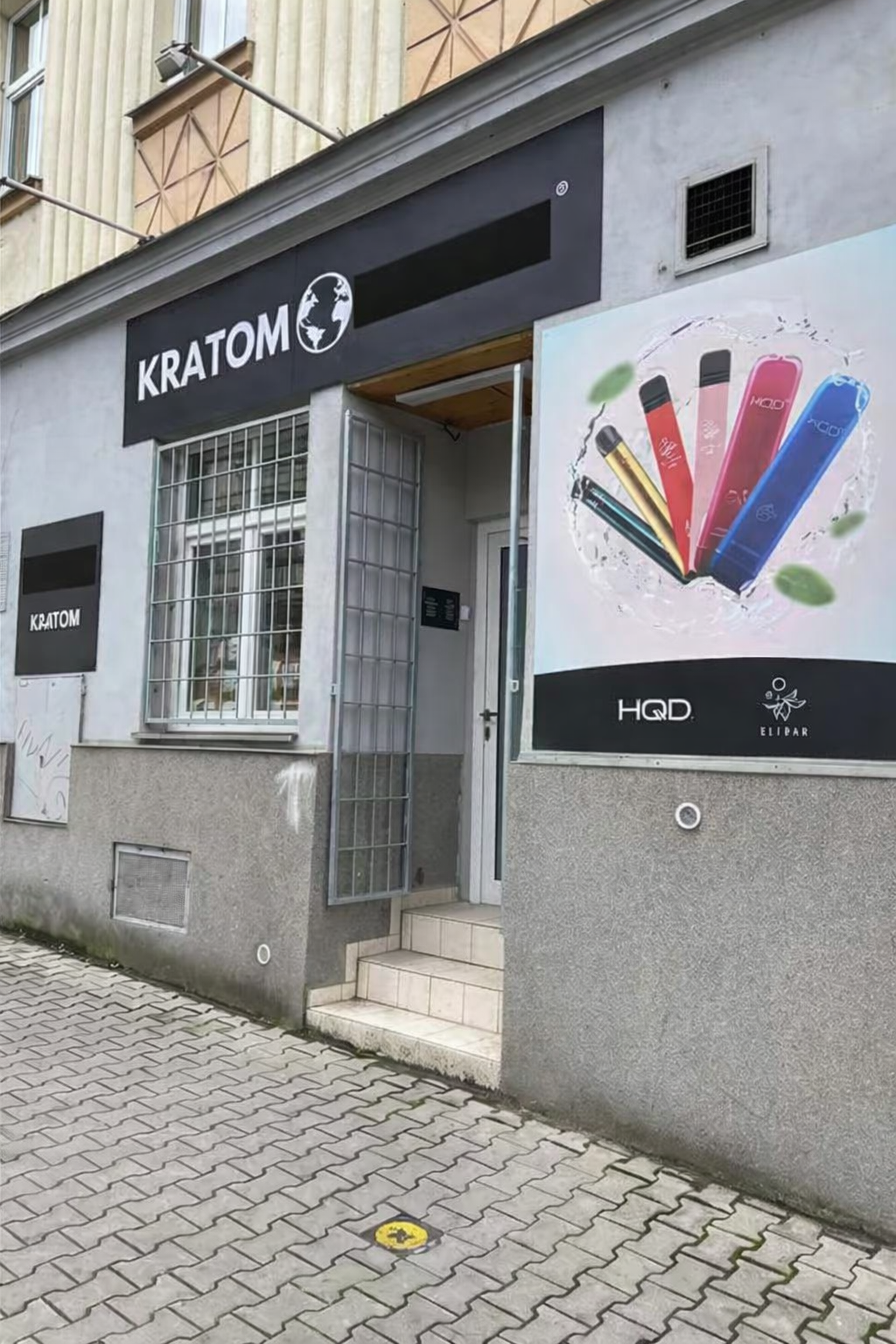
In 2025, a new regulatory framework was implemented for kratom in the Czech Republic. The plant is now known as a “psychomodulatory substance”, a classification created for substances classified as neither pharmaceuticals, nor foods, nor dietary supplements. This specific classification is a new approach championed by former Czech Drug Minister Jindrich Voboril, and it could serve as a model for other countries in the European Union and even in the US.
Under the law, kratom cannot be sold to persons under the age of 18. Only licensed sellers can legally sell kratom with permits from the Ministry of Health. Online sales are restricted unless tied to a licensed physical store, and vending‑machine sales are banned entirely. Businesses handling kratom must comply with specific quality, labeling, and documentation requirements, and licensing must be renewed annually.
Since 2010, Czech Republic’s drug policy has focused on primary prevention, treatment, social integration, harm reduction, risk minimization, and drug supply reduction. Imprisonment for simple possession is regarded as a harmful policy that exacerbates problems surrounding problem substance use.
A recent wave of negative kratom news has appeared in Czech media. One reason may be that many of the rules for psychomodulatory substances have only been truly implemented since November 2025, despite going into effect at the beginning of the year. Enforcement in an attempt to prevent youth access has also set off a wave of stories about teens being negatively impacted by kratom. Also, the sudden disappearance of online kratom stores has caused a market disruption, prompting news stories. And in general, media focuses on controversial stories, especially surrounding substance use.
Despite some of the events occurring last year, all of the following stories appeared in Czech media in mid-February, 2026:
A vending machine on public property near a school in the town of Frýdek-Místek was found to contain kratom products, despite such vending machines being banned in public since December 1, 2024. The owner was contacted by town officials, and the machine was removed within 24 hours, in accordance with national regulations. The story was published in Czech news outlets Ostravska, Deník, Centrum.cz, Novinykraje.cz, Polar.cz, and Seznam.cz.
Fzone, a Czech technology news website, covered the death of a California teen, in a story originally published in the New York Post. The teen, who had sought the advice of an AI chatbot two years earlier regarding kratom, died in May 2025 after ingesting 185 Xanax tablets.
Sinmed.cz reported on a 16-year-old girl who, in 2025, had to have a liver transplant at the Institute of Clinical and Experimental Medicine (IKEM) in Prague, apparently after ingesting kratom. According to the story, “The fact that the case occurred and the girl was transplanted with a liver from her mother was confirmed to us by the head of the IKEM transplant surgery clinic, Professor Jiří Froněk. ‘Yes, it happened, I can’t comment on it any more,’ he told SinMed.cz.” Details like dose, product information, alkaloid makeup, purity, blood concentration, duration and frequency of use, and the presence of other drugs or contaminants were unavailable. At least three major Czech news websites (iDNES.cz, Blesk.cz, Deník.cz) published their own articles about the story between February 16 and 17.
Kurzy.cz, a financial news website, published a February 16 story “Doctors warn against the use of kratom” covering doctors who are giving educating children in classrooms about the risks associated with kratom. The Czech Republic, in particular, has had an ongoing problem with children accessing kratom, and an educational campaign aligns with how the nation generally promotes preventative health education, over punitive measures when it comes to substance use. However positive the campaign may be, this media coverage seems to align with the recent rash of negative kratom news.
Negative news about substances, especially published in a small window of time, is sometimes a coordinated effort by government agencies and special interests seeking to implement prohibition. In the case of kratom in the Czech Republic, as the new regulatory framework for psychomodulatory substances settles into practice, enforcement gaps, market adjustments, and heightened public attention are naturally generating scrutiny. The coming months will reveal how effectively the Czech model can balance public health, youth protection, and a regulated marketplace—while offering a potential blueprint for other nations.