
Disclaimer
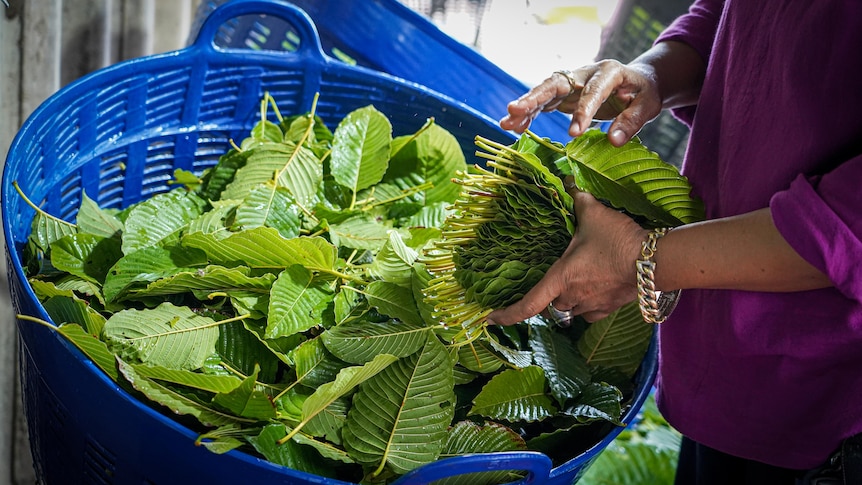
This is an article summarizing a study on kratom consumers from Thailand, who use the traditional method of fresh leaf kratom brewed into a tea. This is not how most people consume kratom in the United States and Europe. Though the alkaloid composition varies from fresh to dried leaf kratom, the closest method to traditional consumption available to most Westerners is in the form of tea brewed from dried, rather than fresh, kratom leaves. Swallowing massive quantities of dried kratom leaf is not traditional use. Consuming liquid shots of highly concentrated alkaloids extracted from the kratom plant is not traditional use. Consuming manufactured drinks containing a mixture of alkaloids derived from kratom and kava plants is not traditional use. Consuming 7-hydroxymitragynine or mitragynine-pseudoindoxil products is not traditional use. Any substance at a high enough dose can be toxic and deadly. Even with traditional use, kratom consumption can lead to dependency and other issues.
Study Summary
A study out of Thailand assessed “285 traditional kratom users and 296 non-user controls from the same community” by studying the participants’ blood physiology including liver and kidney function. “After adjusting for confounders,” write the authors, “no clinically significant differences were observed in hepatic or hematological parameters, with mean values for both groups remaining within normal clinical reference ranges.”
The researchers did find lower serum creatine and higher estimated glomerular filtration rate (eGFR: a measurement of how well kidneys are filtering waste from the blood) in kratom consumers. However, this could also be attributed to lower average Body Mass Index (BMI) in the kratom consumer group.
A 2018 study on 58 kratom consumers and 19 “healthy controls” in Malaysia found similar results: “These data suggest that even long-term and heavy kratom consumption did not significantly alter the hematological and clinical-chemistry parameters of kratom users in a traditional setting.”
In contrast, multiple case reports of apparent kratom toxicity have been published in the United States. A comprehensive review published in 2020 of cases that reported liver injury after kratom use found, “Kratom likely causes liver injury based on the totality of low-quality human evidence, and, in the context of epidemiologic, animal, and mechanistic studies.” Another review published in 2024 found, “The in vitro studies focused on metabolizing enzymes, indirectly indicating kratom toxicity. By contrast, the in vivo results directly demonstrated kratom’s toxic effects on the liver, kidneys, lungs, and brain. Case studies, primarily from Western countries, involved both single and combination use of kratom”.
“We Kinda Ruin Things”: Traditional Vs. Modern Kratom Use
Overdose deaths from alkaloids found in kratom are unheard of where traditional use occurs in Southeast Asian countries. However, overdoses from kratom alkaloids alone have been reported in the United States, albeit rarely.
In a recent webinar held by NMS Labs, forensic toxicologist Justin Brower explained, showing a slide entitled “‘Westernized’ Kratom: We kinda ruin things”, “Here in the United States, we kinda like to ruin things. We always have to super-size and fortify and adulterate them. We’re not using it in a traditional sense… These are very concentrated kratom extracts.” He went on to say that “In contrast to Southeast Asia, we do have many overdose deaths, either in combination with other drugs such as CNS depressants like benzodiazepines and opioids, but we also see overdose deaths due to kratom use alone.”
NMS Labs published a report in 2023 based on postmortem blood analyses, finding that “Mitragynine has been listed as the primary toxicological finding in several overdose deaths albeit at a lower frequency compared to overall positivity, particularly when present at elevated concentrations (> 1000 ng/mL)”.
Because of kratom’s long half-life—the time it takes for a substance to be 50% metabolized, which for kratom alkaloids is 8–24 hours—Brower explained, “It will accumulate in the body…so if someone is consuming kratom chronically or daily, they’re not clearing all of those alkaloids, especially mitragynine, from the body before their next use. So it’s going to keep building, and building, and building.”
Kratom may also increase the time it takes for other drugs, such as opioids, to metabolize, thus causing overdoses in cases where the decedent has consumed multiple substances.
Poor Data to Go On
However, data on kratom toxicity is often limited. In case reports, basic information such as kratom product, dosage, and method of administration is not assessed. Elevated levels of heavy metals such as lead have been found in kratom sold in the US, and may be responsible for toxic adverse events. Multiple scientists have called for “clarity and context” in kratom case reports. A 2023 National Institutes on Drug Abuse (NIDA) review found that case reports “tended to be inadequate in full assessment of the patient’s kratom use.”