
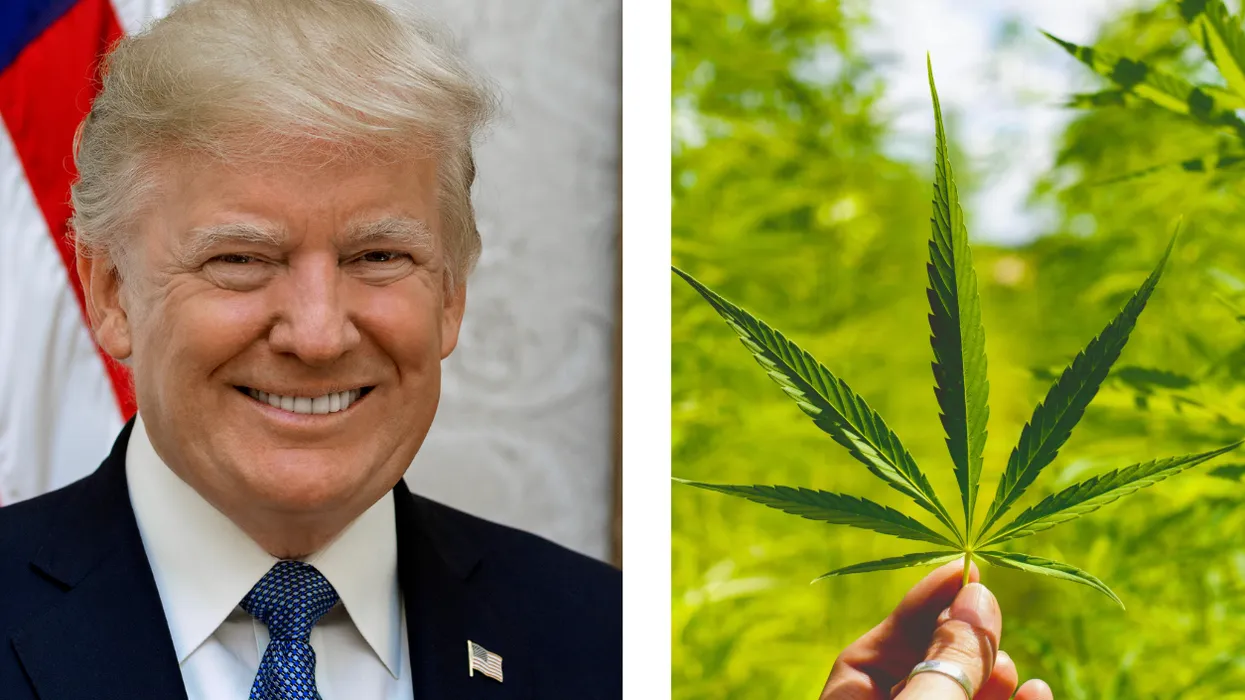
On December 18, 2025, President Donald Trump signed an executive order directing the federal government to reschedule cannabis from Schedule I to Schedule III of the Controlled Substances Act (CSA).
This does not legalize cannabis for recreational use, but places it in the same category as anabolic steroids, Tylenol with codeine, buprenorphine, and ketamine.
States will be able to maintain more stringent restrictions on cannabis than the federal government (such as keeping it classified as Schedule I), or keep their own established medicinal and recreational programs. More states, however, are likely to move marijuana to Schedule III, as lawmakers in the past cited the federal government’s restriction on cannabis as the reason they would not ease state restrictions.
In a state where restrictions on cannabis will not be more stringent than the federal Schedule III classification, all physicians licensed by the Drug Enforcement Administration (DEA) will be able to prescribe it. Most physicians can already prescribe drugs currently classified as Schedule III.
Besides increased access through prescriptions, other benefits, as pointed out by Marijuana Moment, are that “the policy change will allow state-licensed marijuana businesses to take federal tax deductions they’ve been deprived under an Internal Revenue Service (IRS) code known as 280E. It will also remove certain research barriers applied to Schedule I drugs.”
Opposition to Schedule III
A recent Gallup poll shows 64% of Americans support marijuana legalization, which will not happen under a Schedule III reclassification.
The Drug Policy Alliance (DPA), which has opposed Schedule III since it was proposed by the Biden administration, is asking its members to call for an end to cannabis criminalization altogether. In a petition, the DPA writes:
Descheduling is the only way to decriminalize marijuana and build a legal framework that benefits all Americans.
As we advocate for the Trump administration to deschedule marijuana, we are also pushing Congress to act. The Marijuana Opportunity, Reinvestment, and Expungement (MORE) Act has been reintroduced in the House of Representatives. This comprehensive legislation would begin repairing the harms of marijuana criminalization. That means ending barriers to jobs, housing, and food assistance; helping ensure a fair playing field so small businesses and people with marijuana convictions can participate in the industry; lifting all barriers to research; and more.Next Steps
Even with an executive order directing action, marijuana cannot be rescheduled until the Department of Justice (DOJ), acting through the DEA, completes the formal rulemaking process required by the CSA. This begins with the publication of a notice of proposed rulemaking in the Federal Register that formally proposes moving marijuana from Schedule I to Schedule III, followed by a public comment period that typically lasts 30 to 60 days.
During the public comment period, individuals, organizations, researchers, industry groups, and advocacy organizations may submit written comments supporting or opposing the proposed change. Parties may also request administrative hearings to present evidence or arguments regarding marijuana’s medical use, abuse potential, and safety. The DEA must review and respond to the administrative record before moving forward.
Next, the DOJ and DEA may issue a final rule that is published in the Federal Register and includes an effective date. Marijuana is not officially rescheduled under federal law until this final rule takes effect.
Once a final rule is issued, it may be challenged in federal court.
Separately, Congress has the authority to reschedule or fully remove cannabis from the CSA through legislation.